
What Is the Process of Self-Creation?
I could best describe it as: “A conceptual framework for the purposeful exploration of the Self, by the Self; to discover, refine, and express the Self.”
It is an inward journey of observation, questioning, experience, and choice. It asks you to examine not only who you believe yourself to be, but how those beliefs are expressed through the way you think, feel, choose, act, and interact with the world around you.
Meaningful personal development requires time. It requires honesty. It may require different thoughts, different choices, different actions, and eventually different ways of relating to yourself and your life. Most importantly, it requires participation.
No one else can undertake this journey for you. Others may offer knowledge, perspective, guidance, encouragement, or challenge, but ultimately you must face your own mirror. You must decide what you find there, what you accept, what you question, what you change, and what you choose to create. The journey cannot be forced upon you. It is one you must choose to make for yourself.
Beginning the Journey
There are two sides to everyone’s story.
There is the person who can be observed through behavior, relationships, accomplishments, failures, appearance, reputation, and action. And there is the person’s inner experience—the private world of thought, emotion, intention, memory, aspiration, meaning, and identity that no outside observer can ever perceive in exactly the same way you do.
Understanding yourself and developing as an individual involves learning to examine both.
The model below is one part of a much larger integrated framework and provides a way for you to begin considering your own journey through life. It combines several ideas and symbolic associations into a single conceptual framework. Some of its individual elements may be familiar from other systems and traditions. Here, however, they are being used together for examining different dimensions of the Self. While it has many uses and applications, you do not need to understand every symbolic association immediately to get started. The purpose of this information is to give you somewhere to begin looking.
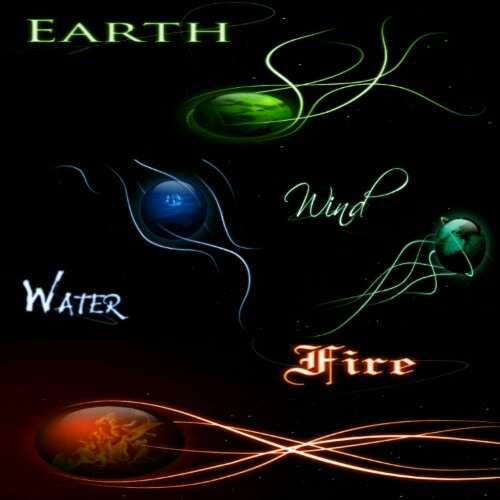
It begins with a circle labeled with the four cardinal directions: East, South, West, North.
Just as the compass it resembles, one way it can be used to help you get a better idea of where you currently are and also to plan your next steps in a direction that’s more in line with where you want to go. With practice other applications of the model will become available. One such use is that the circle becomes a framework in which to hold what is best described as an Inner Mirror.
The Four Directions
Each of the four directions represents a different area of personal development.
East — Air – Knowledge – Self-Awareness – The Intellectual Body
East begins with awareness. What do you know? What do you believe? What do you still need to understand? And perhaps most importantly: What do you know about yourself?
Growth begins with the willingness to learn—including the willingness to discover that some of what you once believed may need to change.
South — Fire – Action – Self-Discipline – The Physical Body
Knowledge alone changes very little. South concerns action, what you actually do with what you have learned.
Self-discipline allows intention to become behavior and behavior to become experience. Through experience, ideas are tested against life rather than remaining possibilities within the mind. It is one thing to understand how you want to live. It is another to live accordingly.
West — Water – Emotion – Self-Compassion – The Emotional Body
West turns attention toward emotional life. What do you feel? How do those feelings influence your perceptions and choices? What happens when you experience pain, attachment, fear, anger, affection, grief, or desire?
Self-compassion does not require avoiding difficult truths. It means learning to encounter yourself honestly without making self-rejection the price of self-awareness. Understanding what you feel—and why—is part of understanding who you are.
North — Earth – Results – Self-Actualization – The Spiritual Body
North concerns what eventually takes form. Knowledge becomes action. Action produces experience. Experience carries emotional meaning. Repeated over time, these processes contribute to the life and person you actually create. Here the question becomes larger: What are you building with your life?
That does not necessarily mean fame, wealth, or something remembered by generations. It can simply mean what remains because you were here: what you created, changed, contributed, taught, protected, built, or passed forward.
“Not all who find questions search for answers, not all who find answers search for meaning, and not all who find meaning search for understanding.”
There are not necessarily right or wrong answers. The purpose is to discover your answers, examine them, test them, understand what they reveal, and perhaps even change them. The questions you choose to explore—and the answers you eventually choose to keep—help determine what develops through the process.
Fortunately, no one needs to have all the answers figured out before beginning to make meaningful changes. In fact, the desire for change is often what begins the process of discovering the answers. Those changes do not always need to be dramatic. Small changes, consistently directed toward something meaningful, can accumulate into profound differences over time.
You will find that many questions have more than one answer. And that many answers have more than one reason. One question in particular that I have found worth considering many times myself is: “What must I learn to truly live a life that I will feel good about having created?”
 Mindspring Connections